Pressure Gauge Panel
Product Code: PG-1
Category: Filters
Pressure gauge panel for monitoring filter pressure. Mounts on the filter or the manifold and shows the working pressure at a glance, signalling when the sand media is loaded and a backwash is due. Note the clean-filter reading after each backwash; when the needle climbs 0.5–0.7 bar above it, backwash again. A reading that never rises points to a channelled sand bed or a leaking multiport valve, while a reading that stays high after backwashing points to calcified sand that needs replacing. Fits the standard gauge port on Waterstar top-mount and side-mount filters.
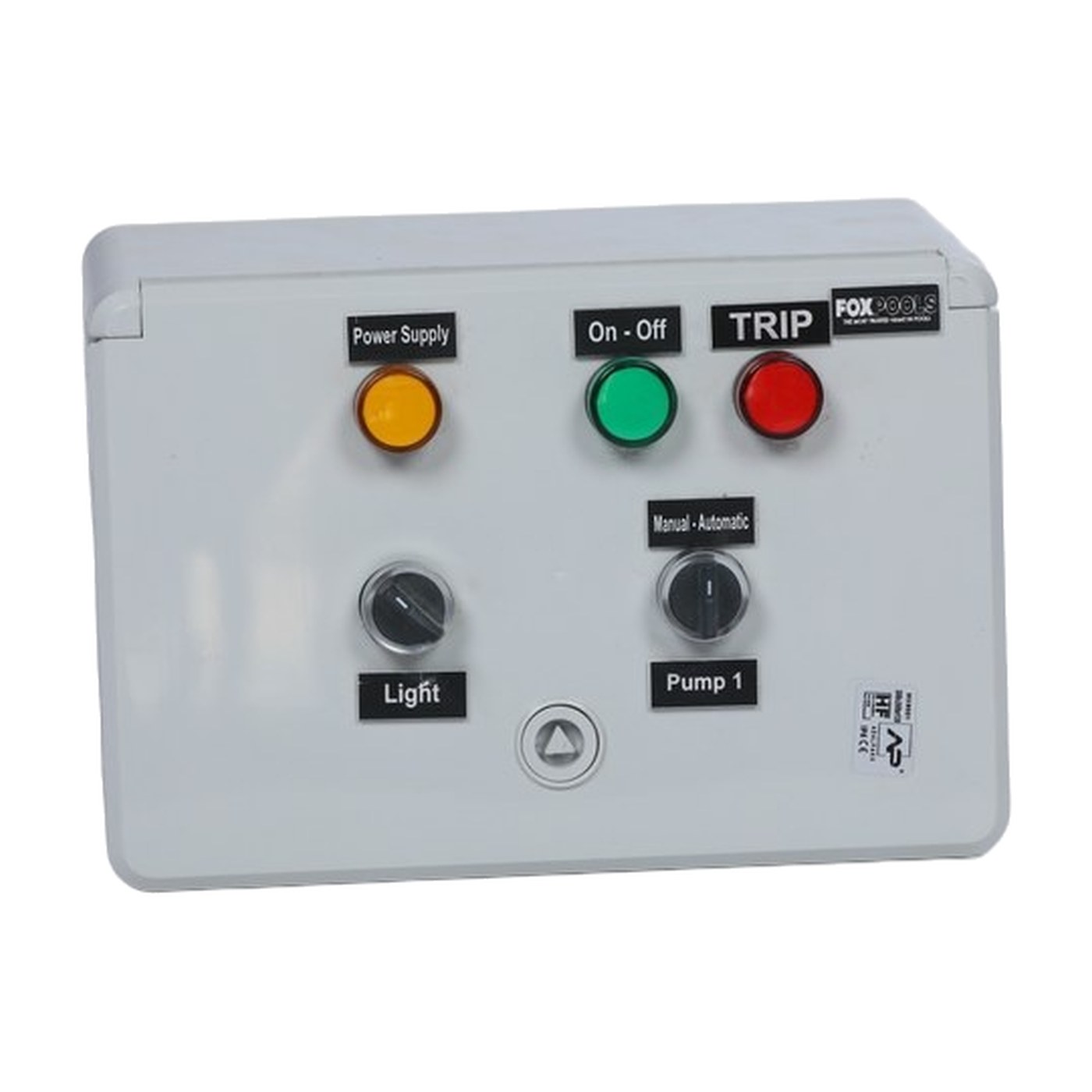
Volume: 0.01 m³
Availability: Made to order
Frequently asked questions
What do the six positions of the multiport valve do?
Filter (normal running), Backwash (reverses flow to flush the bed to waste), Rinse (re-settles the bed for 20–30 seconds after a backwash), Waste (drains the pool or vacuums heavy dirt straight to drain, bypassing the filter), Recirculate (circulates without filtering, used when dosing) and Closed. Always stop the pump before moving the handle.
Which multiport valve fits my filter?
MPV-T valves are top-mount, for the Waterstar T-series residential filters; MPV-S valves are side-mount. Both come in 1.5 inch and 2 inch — choose the size of your pump and pipework. All are 6-way with a pressure-gauge port; the MPV-T-15 connects to a 50 mm filter tree.
Which sand grade goes where?
0.4–0.8 mm silica sand (FM-4-8-25) is the filtration layer used in every Waterstar filter. 0.8–1.2 mm (FM-8-12-25) is the intermediate layer specified on some commercial filters between the 1–2 mm gravel support bed and the fine sand. Never substitute building sand — it is neither washed nor graded and will channel.
How often should the sand be replaced?
Every few seasons, or sooner when backwash intervals get shorter, the water stays cloudy after a backwash, or the bed has channelled or formed mud balls. Replace the full charge with the grade on the filter's data sheet and rinse the new bed before the first filter cycle.